Can Yoni Steaming Improve Fertility? TTC Success Stories & What Women Experience

Many women who are TTC (trying to conceive) explore holistic practices such as yoni steaming as part of their fertility journey.
Some women discover it through social media. Others hear about it from a friend, acupuncturist, or holistic practitioner. And many are simply searching for something—anything—that helps them feel more connected to their bodies after months or years of trying to conceive.
But one question often comes up:
Can yoni steaming actually improve fertility?
While yoni steaming is not a fertility treatment and should never replace medical care, many women choose to incorporate it into their fertility journey as a way to support cycle awareness, encourage relaxation, reconnect with their bodies, and create intentional self-care rituals during what can often be a stressful and overwhelming season of life.
In this article, we'll explore what yoni steaming is, what it can and cannot do, and share real stories from women who incorporated steaming into their fertility journey.
What Is Yoni Steaming?
Yoni steaming is a traditional wellness practice that involves sitting over warm herbal steam for a designated period of time.
Across various cultures and traditions, women have used steaming as part of postpartum recovery, menstrual wellness, reproductive care, and ceremonial self-care practices.
Today, many women use fertility-focused steam blends as part of a holistic reproductive wellness routine.
Depending on the individual and their goals, steaming may be incorporated to support:
Cycle awareness
Relaxation and stress reduction
Menstrual wellness
Postpartum healing
Fertility preparation when TTC
Reconnecting with the body after loss or medical interventions
Many women describe the practice as creating a dedicated space to slow down, listen to their bodies, and cultivate a deeper relationship with their reproductive health.
Why TTC Women Turn to Yoni Steaming During Their Fertility Journey
Trying to conceive can be emotionally exhausting.
Between ovulation tracking, hormone testing, fertility apps, procedures, and endless internet advice, it's easy to feel disconnected from your own intuition and overwhelmed by information.
Many women tell me they aren't necessarily looking for another fertility "hack."
They're looking for a way to feel supported.
Yoni steaming often becomes part of that support system.
Women may choose to steam because they want to:
Create a regular fertility ritual
Develop greater cycle awareness
Prioritize self-care during the TTC process
Feel more connected to their womb and reproductive health
Support overall reproductive wellness
Reduce stress and create space for reflection
While every woman's journey is unique, many find that steaming becomes less about "fixing" fertility and more about cultivating a healthier relationship with their bodies.
What Yoni Steaming Can—and Cannot—Do
One of the biggest misconceptions surrounding yoni steaming is that it guarantees pregnancy.
It does not.
No holistic practice, supplement, therapy, or medical treatment can guarantee conception.
Yoni steaming should not be viewed as a replacement for appropriate medical evaluation or fertility care.
What it can offer is something different.
Many women report benefits such as:
Feeling more connected to their cycles
Increased body awareness
Improved relaxation
Reduced stress surrounding fertility
Greater consistency with self-care practices
A sense of empowerment during the fertility journey
For many women, the greatest benefit isn't a specific physical outcome. It's the opportunity to create intentional space for healing, reflection, and connection.
What Changes Do Women Commonly Notice After Steaming?
Every woman's experience with yoni steaming is unique.
While yoni steaming is not intended to diagnose, treat, or cure medical conditions, many women report noticeable shifts in their menstrual cycles, fertility awareness, and overall sense of well-being after incorporating steaming into their self-care routine.
In my practice, women commonly share experiences such as:
Less PMS and premenstrual discomfort
Reduced cramping during menstruation
Changes in menstrual flow
Improved awareness of cervical mucus patterns
Increased libido
Greater connection to their cycles
Feeling more relaxed and supported during their fertility journey
A deeper sense of connection to their womb and reproductive health
Some women who previously experienced dark brown blood at the beginning or end of their cycles report that their menstrual flow appears brighter red and more consistent over time. Others notice changes in cervical mucus, increased fertility awareness, or improvements in symptoms they previously associated with hormonal imbalance.
Beyond the physical experience, many women describe steaming as emotionally supportive. The ritual itself creates dedicated time to slow down, reflect, and reconnect with their bodies. Some women find that feelings related to fertility struggles, pregnancy loss, relationships, or significant life transitions naturally surface during their steaming practice.
Whether viewed through a physical, emotional, energetic, or spiritual lens, many women describe yoni steaming as helping them move from feeling disconnected from their bodies to feeling more empowered and engaged in their reproductive health.
For many, the greatest transformation isn't a specific symptom change—it's developing a deeper relationship with themselves and their body's innate wisdom.

TTC Success Story #1: From "IVF Only" to Mother of Three
One client came to me after being told by her fertility clinic that IVF was her only option due to a tipped uterus.
In fertility bodywork, a tipped uterus is something we frequently assess because restrictions in fascia, muscles, and surrounding tissues can sometimes contribute to positioning issues. After working together through a series of sessions, life circumstances changed and she moved farther away, making regular bodywork difficult.
Together, we decided she would continue supporting her reproductive wellness at home through a consistent yoni steaming practice.
About a month later, while I was on vacation, I received a text message from her with exciting news—she was pregnant naturally.
Today, she is the proud mother of three children and often shares how grateful she is that she learned ways to actively support her reproductive health rather than feeling powerless in the process.

TTC Success Story #2: Reconnecting with Hope After Years of Loss
Another client incorporated both yoni steaming and sound healing into her fertility journey.
For years, she had experienced recurrent pregnancy loss and carried the emotional weight that often accompanies a long fertility journey. During her sessions, she frequently shared vivid visualizations and deep experiences that helped her feel connected to the possibility of becoming a mother.
Over time, she told me that one of the greatest gifts wasn't necessarily the steaming itself—it was learning how to care for her womb and understand her cycle in a way that felt empowering.
Knowing when to steam, how to support her body, and having healthy outlets for processing emotions helped her feel more confident moving forward after years of uncertainty.
Today, after nearly a decade of fertility challenges and losses, she is holding her beautiful newborn son.

TTC Success Story #3: Creating a Fertility Ritual During IVF
One client came to me after experiencing an unsuccessful embryo transfer.
Because she lived in Napa, we couldn't always coordinate in-person appointments, so our work together included both fertility bodywork sessions and education about safe, appropriate yoni steaming practices she could continue at home.
Over time, steaming became part of her fertility preparation ritual. Rather than feeling like a passive participant in the IVF process, she felt more connected to her body and more empowered in her journey.
She understood the importance of timing and knew not to steam during ovarian stimulation medications. We stayed in close communication throughout her cycle.
In preparation for transfer, we completed bodywork several days beforehand. On transfer day, she performed a very gentle steam with minimal herbs, a practice she felt comfortable with because of her previous experience and understanding of steaming protocols.
Most importantly, she approached the transfer feeling calm, supported, and deeply connected to her body.
That transfer was successful.
Today, she is the mother of a beautiful toddler and continues to describe that season of her life as one where she finally felt empowered rather than overwhelmed.
What These Stories Have in Common
Every fertility journey is different.
Some women conceive naturally. Some pursue IUI or IVF. Some experience pregnancy loss before eventually welcoming a baby. And for some, the greatest transformation isn't physical at all—it's learning to trust their bodies again.
Yet despite their different paths, the women in these stories shared something important: they stopped feeling powerless.
Whether through fertility education, bodywork, cycle awareness, yoni steaming, or simply having a supportive plan in place, each woman became a more active participant in her reproductive health. Instead of wondering if they were missing something, they began understanding their cycles. Instead of waiting helplessly for answers, they started developing a deeper relationship with their bodies and learning how to support themselves along the way.
While every outcome is unique and no practice can guarantee pregnancy, many women describe this shift as one of the most meaningful parts of their journey. The confidence that comes from understanding your body, recognizing your fertile signs, and having supportive practices available can help transform fear and uncertainty into clarity and empowerment.
Again and again, I see women move from feeling disconnected from their reproductive health to feeling informed, supported, and engaged in their care. While the circumstances may differ, many of the women I work with share several common experiences.
They Become More Aware of Their Cycles
One of the biggest shifts many women describe is becoming more aware of their body's natural patterns. When women create intentional time to check in with themselves—whether through steaming, charting, bodywork, or other supportive practices—they often begin noticing subtle changes they may have previously overlooked.
They become more familiar with their menstrual cycles, cervical mucus patterns, ovulation signs, energy fluctuations, and emotional rhythms. Rather than feeling confused by what their bodies are doing, many women begin to develop a greater sense of understanding and trust in the signals their bodies are providing.
They Prioritize Self-Care
Trying to conceive can quickly become a cycle of appointments, testing, waiting, and worrying. In the midst of all that, many women realize they have forgotten how to care for themselves.
Yoni steaming encourages women to slow down and create dedicated time for rest, reflection, and nourishment. Instead of focusing solely on the outcome, the practice invites women to become present with themselves in the here and now. For many, that simple shift becomes an important part of supporting both emotional and reproductive wellness.
They Feel More Empowered
Fertility journeys can sometimes leave women feeling as though their bodies are something happening to them rather than something they actively participate in.
While no practice can guarantee pregnancy, many women describe feeling more empowered when they better understand their cycles and have supportive tools available to them. Whether through education, bodywork, steaming, or lifestyle changes, they begin to feel more involved in their care rather than waiting helplessly for the next answer or appointment. That sense of participation often becomes one of the most valuable parts of the journey.
They Create Space for Healing
Whether navigating infertility, pregnancy loss, IVF, hormonal challenges, or simply the emotional ups and downs of TTC, many women find that dedicated time for reflection becomes an important part of their overall well-being.
Steaming often creates a quiet space where emotions can be acknowledged rather than pushed aside. Some women use the time for meditation, prayer, journaling, visualization, or simply sitting in stillness. Others find it becomes a meaningful ritual for releasing grief, processing difficult experiences, and reconnecting with themselves.
For many women, healing is not only physical. It is emotional, mental, energetic, and spiritual as well.
How to Get Started Safely
If you're interested in incorporating yoni steaming into your fertility journey, it's important to do so thoughtfully.
General guidelines include:
Steam only when appropriate for your individual situation.
Avoid steaming during pregnancy.
Use high-quality herbs from trusted sources.
Follow proper safety precautions regarding temperature and duration.
Consult your healthcare provider when necessary.
Because every woman's cycle and reproductive history are unique, individualized guidance is often beneficial.
A Note About IVF Treatment
If you're currently undergoing IVF treatment, have recently started stimulation medications, or are completely new to yoni steaming, it's best to pause steaming and speak with your provider or qualified practitioner before beginning.
Because every fertility journey is unique, steaming recommendations may vary depending on where you are in your cycle or treatment plan. In general, I do not recommend starting a new steaming practice during ovarian stimulation medications or after embryo transfer.
When used appropriately and with proper timing, yoni steaming can be a beautiful addition to reproductive wellness. However, understanding when to steam is just as important as understanding how to steam.
Fertility Support Beyond "Just Try"
One of the most common things I hear from women is:
"I wish someone had explained all of this sooner."
Many women are told to simply "relax," "keep trying," or "wait and see."
But understanding your cycle, supporting your reproductive health, and feeling connected to your body deserve more attention than guesswork.
Whether you're TTC naturally, preparing for fertility treatment, navigating pregnancy loss, or simply seeking a deeper understanding of your reproductive health, know that support exists.
You deserve education.
You deserve clarity.
And you deserve to feel empowered in your fertility journey.
Download the Free Yoni Steaming Guide
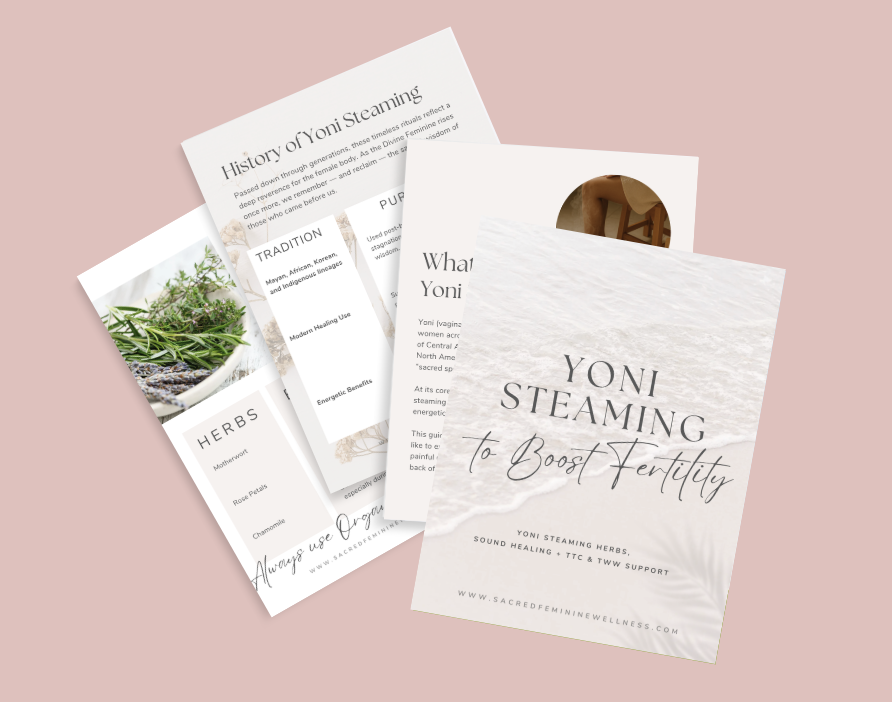
Whether you're TTC naturally or preparing for future fertility treatment, understanding when and how to steam safely is essential. Learning the proper timing, techniques, and precautions can help you feel more confident and empowered in your reproductive wellness journey.
Download my free Yoni Steaming Guide to learn the foundations of fertility-focused steaming, cycle awareness, and holistic reproductive wellness. You'll also receive practical resources designed to help you better understand your body, support your womb health, and feel more connected to your fertility journey.
→ Download the Free Yoni Steaming Guide
Signature Steam Blend
Coming July 2026
After years of supporting women through fertility, postpartum healing, and reproductive wellness, I'm excited to introduce my first handcrafted herbal steam blend.
Womb Care is my signature blend, thoughtfully created to support feminine wellness, relaxation, and a deeper connection with your womb through the timeless ritual of yoni steaming.
✔ Handcrafted in small batches
✔ Organic herbs
✔ 8 steam sessions per bag
✔ Created to support your feminine wellness ritual through every season of life
Join the waitlist to be the first to know when Womb Care becomes available this July.
Looking for guidance on when to steam?
Yoni steaming is not a one-size-fits-all practice. The ideal timing, herbs, and frequency vary depending on your body, your goals, and the season of life you're in.
My Yoni Steaming eBook is designed to help you understand yoni steaming through every season of womanhood. Rather than following a one-size-fits-all approach, you'll learn how steaming protocols differ for period pain, fertility preparation, postpartum recovery, cycle wellness, menopause, and more—along with safety guidelines and practical recommendations to help you steam with confidence.
→ Explore the Yoni Steaming eBook
About the Author:
Candice Kosty is a fertility-focused bodyworker with over 20 years of clinical experience, former Google wellness practitioner, and creator of Sacred Feminine Wellness.
After overcoming Stage 3 endometriosis and navigating her own fertility journey, she now helps women understand their cycles, support reproductive health, and feel empowered in their path to motherhood through fertility bodywork, sound healing, yoni steaming, and holistic wellness education.
Learn More About Candice → Here
Read Next
🌿 Yoni Steaming for Fertility: Does Vaginal Steaming Help You Get Pregnant?
Learn the fundamentals of fertility-focused steaming, when to yoni steam during your cycle, and how women use steaming as part of their reproductive wellness journey.
🌿 Did My Ancestors Practice Yoni Steaming? European Womb Traditions & Fertility Rituals
Explore the history of womb steaming traditions, ancestral fertility practices, and why women across cultures have used steam rituals for generations.
🌿 The Sacred Feminine Journey: Honoring Womb Healing Through Every Season of Sisterhood
Explore the wisdom of the Maiden, Mother, Wild Woman, and Wise Woman while discovering simple rituals to reconnect with your womb, your intuition, and every season of womanhood.