Yoni Steaming for Fertility: Does Vaginal Steaming Help You Get Pregnant?
Learn how yoni steaming for fertility (also known as vaginal steaming) may support womb health, cycle balance, and your journey to getting pregnant naturally.
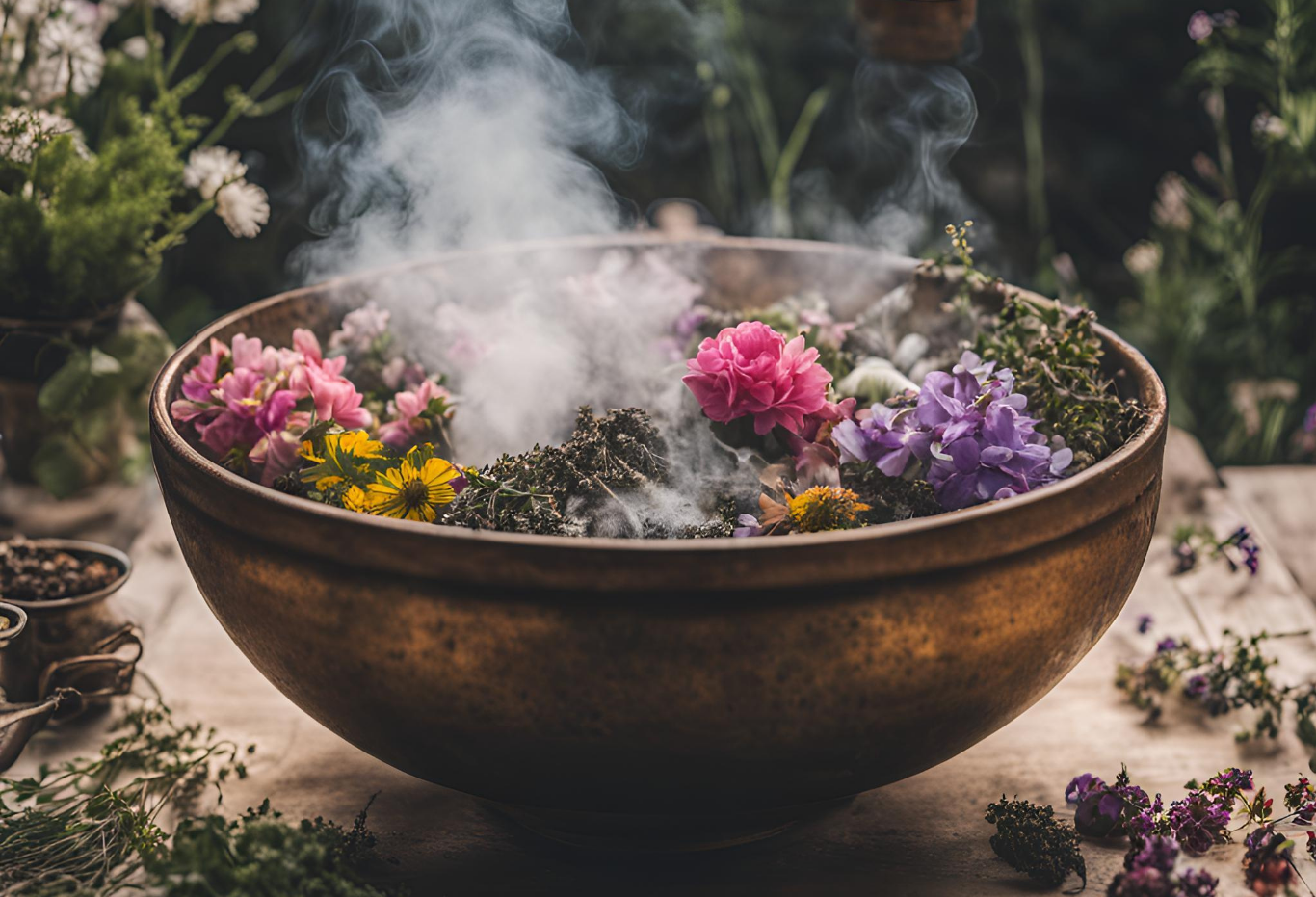
If you’ve been trying to conceive, you’ve probably searched for natural ways to support your fertility and yoni steaming for fertility may have come up.
So the question is:
Does yoni steaming (also known as vaginal steaming) actually help you get pregnant?
The answer isn’t a simple yes or no — but when used correctly, yoni steaming can support key areas of fertility like circulation to the uterus, cycle regulation, and overall womb health.
While it’s not a quick fix, many women use vaginal steaming for fertility as part of a more holistic approach to support their body naturally during their TTC journey.
It’s important to note that while research on vaginal steaming and fertility is still limited, this practice has been used for generations in traditional cultures as a form of womb healing and reproductive care.
Today, many women are returning to these practices — not as a replacement for medical support, but as a way to feel more connected, supported, and empowered in their fertility journey.
Not sure when or how to start yoni steaming for fertility?
This is where most women accidentally do it wrong — and miss the window that actually supports ovulation.
I put together a simple step-by-step guide so you know exactly:
• when to steam in your cycle
• how to do it safely
• and how to support fertility (not disrupt it)

What Is Yoni Steaming?
Yoni Steaming is a gentle herbal practice where a woman sits over a pot of warm, herb-infused steam. The steam rises into the vaginal and uterine area, bringing warmth, circulation, and cleansing to the womb space.
Rooted in multiple ancestral traditions across Central America, Africa, Asia, and parts of Europe, steaming has long been used to:
Regulate cycles
Ease cramps
Heal after birth
Clear infections
And yes… boost fertility
Today, more and more women are reclaiming this sacred wellness ritual — not as a fad, but as a deeply embodied form of womb care.
The Moment I Did My First Yoni Steam...
The first time I tried yoni steaming, I didn’t exactly volunteer for it.
I was in the middle of my Maya Abdominal Therapy training, already feeling slightly overwhelmed by all the new bodywork techniques. When the instructor asked if I had tried yoni steaming yet, I sort of froze. I hadn’t — and honestly? I was hoping to skip it. It sounded a little… weird.
But she gently smiled, set me up with a steam chair and a warm bowl of herbs, and said,
“Women have been doing this for centuries for reproductive wellness. When you're done, if you feel tired, just go lay down and take a nap.”
A nap? I laughed internally. My energy was high — no way I’d feel sleepy.
But then the steam began.
It was surprisingly gentle. The warmth felt like it was relaxing me from the inside out — like a soft internal hug I didn’t know I needed. Odd and comforting all at once.
When I stood up afterward, it felt like I had just climbed out of a hot tub. My body was so deeply relaxed that I thought, maybe I will lay down for a few minutes… And I had the best nap of my life. I couldn’t believe that something so simple had such a profound effect on my nervous system, my body, and my womb.
That experience cracked something open for me.
Over the years, I began steaming regularly — for period regulation, to boost fertility, postpartum healing, etc. It became part of my womb care toolkit. And I remember thinking: Why on earth did we ever stop doing this?
In class, I learned that in parts of Central America, this is still considered a first line of defense before seeing your midwife or OB. If you have an issue? They ask if you’ve steamed first — unless, of course, you suspect you’re pregnant.
Today, I guide women around the world in reclaiming this powerful, gentle ritual. Whether you're TTC naturally, preparing for IVF, recovering from miscarriage or birth, or addressing fibroids, endometriosis, or PCOS - as steaming can help bring your body back into balance.
But the healing isn’t just physical. I’ve come to see how the womb can store emotional pain — from past experiences, long-held fear, or stories we've inherited. Yoni steaming has helped me soften those internal edges, and gently begin to release what no longer belongs in my body.
That’s why I now pair this ritual with practices like breathwork and guided meditations — to help the nervous system feel safe enough to let go. If you’ve ever felt like your body is holding something you're finally ready to release, stay tuned: next week I’ll be sharing a free Womb Healing Meditation to support emotional release and womb connection.
Want to try yoni steaming for fertility—but not sure how to start safely?
This free guide shows you exactly how to begin at home with confidence.
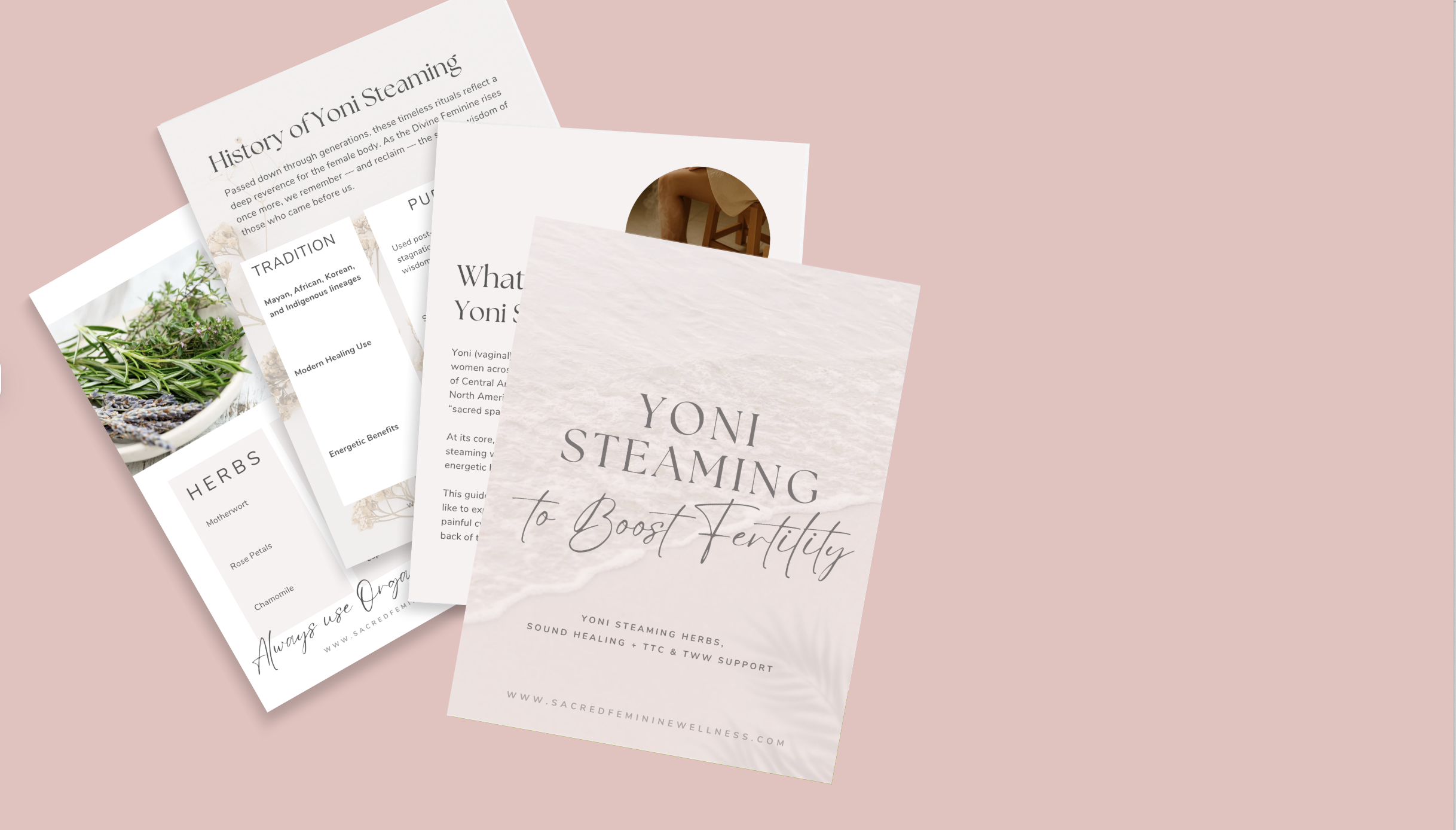
We Once Knew How to Care for Ourselves
For thousands of years, midwives and traditional healers have tended to the womb with deep reverence - using herbal steams, massage, prayer, and ceremony to support fertility, birth, and postpartum healing. This wisdom was often passed down through matriarchal lineages - woman to woman, generation to generation - rooted in the rhythms of nature and the cycles of the moon.
In contrast, the field of obstetrics and gynecology as we know it today has only existed for about 160 years. Much of it was developed through a patriarchal medical system that often viewed the female body as something to be controlled, dissected, or pathologized - not honored. For example:
The modern OB/GYN specialty was formalized in the mid-1800s, with figures like Dr. J. Marion Sims, who is often called the “father of modern gynecology” - yet performed experimental surgeries on enslaved Black women without anesthesia.
In contrast, yoni steaming and vaginal herbal care have roots in Central American, African, and Asian healing traditions - where steam was used for postpartum care, fertility, cleansing, and spiritual rituals.
In many Indigenous and village communities, women were expected to steam or use herbal baths first before seeking outside help - and midwives were trained not just in birth but in whole-body womb care, including massage, dietary wisdom, and emotional support.
This isn't about rejecting modern medicine. It’s about reclaiming what we were never meant to forget. Practices like yoni steaming remind us that we already have powerful ways to support our bodies gently, naturally, and on our own terms.
The History of Yoni Steaming Across Cultures
Yoni steaming is often spoken about today as if it belongs to one culture - but historically, this practice did not originate from a single lineage.
Herbal steaming for womb care has appeared across many ancestral cultures, often under different names, using local herbs, and guided by midwives, healers, and elder women.
Across Central America, including Mayan traditions, vaginal steaming was (and in some regions still is) considered a first line of care for menstrual regulation, postpartum healing, fertility support, and womb cleansing - often before seeking outside intervention.
In Africa, particularly in regions of Mozambique and surrounding areas, women have long practiced vaginal steaming (locally called tumbuko), especially in postpartum care and rites of passage.
In Asia, including Korea, Vietnam, and parts of Southeast Asia, similar practices such as chai-yok were used to restore warmth, circulation, and balance after birth or during reproductive transitions.
Even in Europe, women historically used herbal baths, smoke, and steam for womb and pelvic care - though much of this knowledge was later suppressed, medicalized, or lost during the rise of patriarchal medicine and the witch trials.
What these traditions share is not a single culture - but a shared understanding:
That the womb responds to warmth, herbs, ritual, rest, and care.
Honoring these practices today isn’t about claiming ownership. It’s about remembering what women once knew - and approaching these rituals with respect, humility, and guidance rather than extraction or trend-based use.
This is why intention, education, and lineage awareness matter.
Does Yoni Steaming Help Fertility? (What to Know)
So, how does sitting over warm steam actually support your ability to conceive?
Here’s what’s happening physiologically and energetically:
Increases circulation to the reproductive organs, bringing fresh oxygen and nutrients to the ovaries, uterus, and cervix
Supports hormonal balance by helping clear excess estrogen and move stagnation
Reduces tension and scar tissue in the pelvic area, especially for women with PCOS, Endo, or past surgeries
Cleanses the uterine lining to prepare for implantation
Soothes the nervous system, calming cortisol levels and supporting parasympathetic "rest & receive" mode (similar to what we activate with sound healing or meditation)
But even more than that, it helps you slow down. To soften. To connect with your womb in a way that reminds her: “You are safe. You are supported. You are loved.”
Avoid steaming if you suspect or/are pregnant, if your tubes are tied, if you have Nexplanon birth control, or an active infection. If you have an IUD, only do a 10 minute steam.
If you’re reading this and thinking…
“I feel like this could help me, but I don’t know where to start…”
You’re not alone.
That’s exactly why I created a simple guide to help you begin safely and confidently.
👉 Download your free Yoni Steaming for Fertility Guide
(Includes when to steam, how often, and what to avoid)
👉 You can also support your cycle alongside steaming with castor oil packs — especially when focusing on circulation and womb support.
Learn when to use them here.
Is Yoni Steaming Safe When Trying to Conceive?
Yoni steaming can be a beautiful, supportive practice during your fertility journey — but timing and intention matter.
When used correctly, steaming is designed to:
Support circulation to the uterus
Encourage natural cleansing of the womb
Help regulate the menstrual cycle
However, there are important moments in your cycle when steaming is not recommended.
For example, steaming should always be avoided:
During your period
After ovulation (during the two-week wait)
If pregnancy is suspected or confirmed
This is because the body is shifting into a different phase — one that is focused on supporting implantation and early pregnancy.
Steaming at the wrong time can disrupt that natural process rather than support it.
This is where many women get confused — not because the practice doesn’t work, but because no one has clearly explained when it’s appropriate to use it.
When approached with proper timing, yoni steaming can be a gentle and supportive addition to your fertility journey.
When to Yoni Steam During Your Cycle for Fertility
One of the most important aspects of yoni steaming for fertility is understanding when your body is most receptive to it.
Steaming is typically used during the follicular phase of your cycle — the time after your period ends and before ovulation begins.
This is when your body is naturally preparing for ovulation, and increased circulation and warmth can be supportive.
During this phase, steaming may help:
Improve uterine blood flow
Support the development of the uterine lining
Encourage a more balanced cycle
However, once ovulation has occurred, your body shifts into a different priority — supporting potential implantation.
At that point, steaming is no longer recommended.
This is why cycle awareness is so important.
Without understanding where you are in your cycle, it’s easy to unintentionally steam at the wrong time — which can create confusion around results.
👉 Inside my full Yoni Steaming Guide, I break this down step-by-step, including how to track your cycle and use steaming in a way that aligns with your body.
Best Herbs for Yoni Steaming for Fertility
Common herbs used for fertility support include:
Rose (uterine toning + emotional support)
Raspberry Leaf (cycle regulation)
Mugwort (circulation)
Chamomile (soothing + anti-inflammatory)
But what matters even more than which herbs you choose… is how those herbs are sourced and prepared.
Why Organic Herbs Matter for Yoni Steaming (Fertility & Safety)
Your vulva is one of the most absorbent parts of your body — even more than your mouth. (Some women even report tasting the herbs as they steam, which shows just how receptive this area truly is.)
That’s why it’s essential to use organic herbs when yoni steaming for fertility.
Anything sprayed with pesticides or additives can be absorbed directly into your bloodstream.
When choosing your yoni steaming herbs, make sure they are:
Most importantly — organic
Clean, dried whole herbs (no essential oils or powders)
Intentionally selected for your specific cycle or condition
For example, certain herbs can be drying, which may not be supportive during fertility preparation.
If you're navigating PCOS, endometriosis, fibroids, cysts, irregular cycles, or recovering from miscarriage or postpartum, your herbal approach should reflect your body’s needs.
Once you understand which herbs to use and when to use them, this practice becomes incredibly powerful.
.
👉 Inside the full Yoni Steaming Guide, I walk you through exactly how to choose and use herbs based on your cycle and fertility goals.
-
Yoni Steaming for Fertility Success Story
One of my clients, Bri, came to me after months of long, irregular cycles. Sometimes 45 days. Sometimes 60. She had a diagnosis of PCOS and was told she might not ovulate without medication.
We began a gentle protocol of Yoni Steaming 3x/month, combined with food-based hormonal support, womb massage, and weekly emotional tapping. Within 3 months, her cycles shortened to 35 days. By month 4 — she was able to confirm ovulation for the first time ever naturally.
The moment she told me she saw a positive ovulation test, she cried.
“I feel like my body is finally waking up,” she said.
➝ If you’re navigating PCOS, irregular cycles, or hormonal imbalance and want to try a gentle, body-led approach —
the Yoni Steaming eBook below offers everything you need to begin your own sacred ritual.
The same protocol that helped Bri — and so many other women in my care — is outlined step-by-step in this guide.

Want Deeper Support? Grab the Full Yoni Steaming eBook
If you’re managing conditions like:
PCOS
Endometriosis
Fibroids or cysts
Infections (like BV or yeast)
Irregular or missing periods
Miscarriage recovery
Postpartum healing
IVF preparation
Perimenopause and more
…then the full Yoni Steaming eBook is your sacred guide.
Inside you'll find:
Herbal protocols by condition
Monthly steam schedules
Tips for combining steaming with castor oil packs, womb massage, and sound healing
Beautiful printable tracking pages
Final Thoughts: Your Womb Deserves Sacred Care
Trying to conceive isn’t just a physical journey — it’s deeply emotional and energetic.
Yoni steaming is a way to bring warmth, softness, and devotion back to your body.
You don’t have to do everything perfectly.
You just have to stay connected.
Breathe into your womb. Speak to her gently.
And if it feels right — offer her the gift of steam.
She’s listening.
If you’ve been trying different things… and still feel unsure if you’re doing it “right” —
This is exactly where deeper support matters.
Signature Steam Blend
Coming July 2026
After years of supporting women through fertility, postpartum healing, and reproductive wellness, I'm excited to introduce my first handcrafted herbal steam blend.
Womb Care is my signature blend, thoughtfully created to support feminine wellness, relaxation, and a deeper connection with your womb through the timeless ritual of yoni steaming.
✔ Handcrafted in small batches
✔ Organic herbs
✔ 8 steam sessions per bag
✔ Created to support your feminine wellness ritual through every season of life
Join the waitlist to be the first to know when Womb Care becomes available this July.
Looking for guidance on when to steam?
Yoni steaming is not a one-size-fits-all practice. The ideal timing, herbs, and frequency vary depending on your body, your goals, and the season of life you're in.
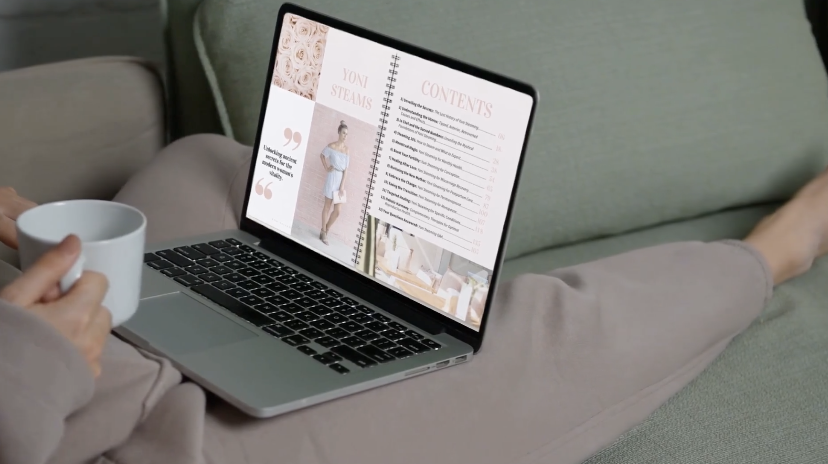
My Yoni Steaming eBook is designed to help you understand yoni steaming through every season of womanhood. Rather than following a one-size-fits-all approach, you'll learn how steaming protocols differ for period pain, fertility preparation, postpartum recovery, cycle wellness, menopause, and more—along with safety guidelines and practical recommendations to help you steam with confidence.
→ Explore the Yoni Steaming eBook
About the Author:
Candice Kosty is a fertility-focused bodyworker with over 20 years of clinical experience, former Google wellness practitioner, and creator of Sacred Feminine Wellness.
After overcoming Stage 3 endometriosis and navigating her own fertility journey, she now helps women understand their cycles, support reproductive health, and feel empowered in their path to motherhood through fertility bodywork, sound healing, yoni steaming, and holistic wellness education.
Learn More About Candice → Here
Read Further:
🌿 Can Yoni Steaming Improve Fertility? TTC Success Stories & What Women Experience
Read real client stories and discover the changes many women notice after incorporating steaming into their fertility journey.
🌿 Did My Ancestors Practice Yoni Steaming? European Womb Traditions & Fertility Rituals
Discover the historical roots of womb steaming and how traditional practices have been passed down through generations.
🌿 The Sacred Feminine Journey: Honoring Womb Healing Through Every Season of Sisterhood
Explore the wisdom of the Maiden, Mother, Wild Woman, and Wise Woman while discovering simple rituals to reconnect with your womb, your intuition, and every season of womanhood.