Curious About Yoni Steaming—but Unsure Where to Begin?
Maybe you’ve heard that yoni steaming can become part of a nurturing womb-care practice, but the information online has left you with more questions than answers.
When should you steam during your cycle?
When should you stop if you’re trying to conceive?
Can you steam during the Two-Week Wait, IUI or IVF?
And how do you create a practice that feels intentional without risking doing it at the wrong time?
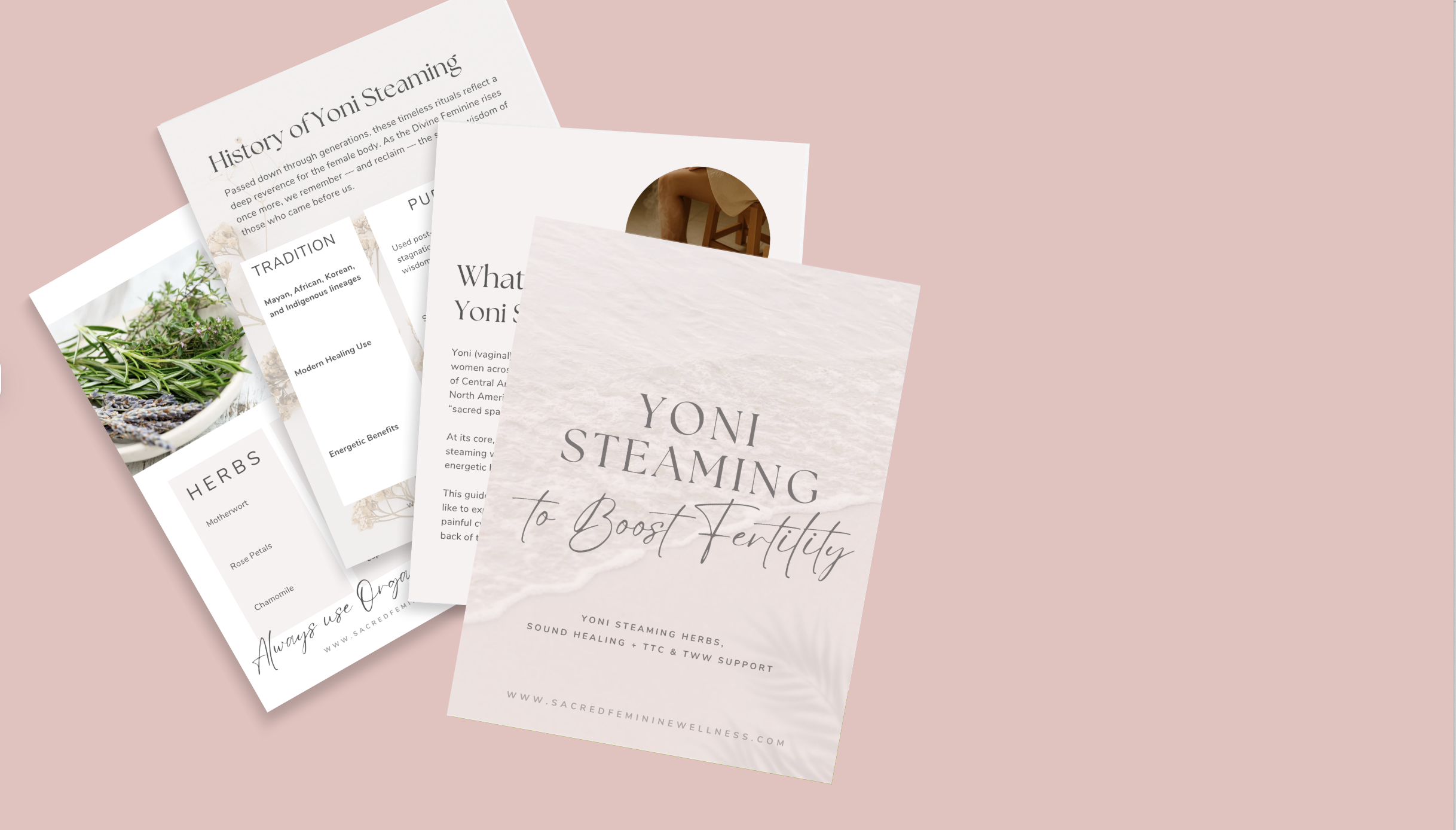
This free introductory guide brings the foundational information together so you can understand the ritual, its timing and its important safety boundaries before you begin.

Here's What's Inside Your Free Guide
This free guide gives you a gentle introduction to yoni steaming specifically for your fertility journey.
Inside, you’ll discover:
What yoni steaming is and why women incorporate it into womb-centered self-care
How to prepare a simple yoni steaming ritual at home
When to steam during your cycle while trying to conceive
When to pause because of ovulation, pregnancy, bleeding or fertility treatment
An introduction to commonly used yoni steaming herbs
A calming, non-steaming ritual for the Two-Week Wait
Sound-healing and intention-setting practices to complement your ritual
You’ll finish with a clearer understanding of how to begin—and, just as importantly, when not to steam.

Why I Created This Guide
After more than 20 years of supporting women through reproductive wellness, I've seen how quickly a simple practice can become confusing when you're trying to piece together information from social media, blogs, practitioners and fertility forums.
Yoni steaming is a perfect example. Women often hear about the practice without being given clear guidance about cycle timing, when to pause, or how it may—or may not—fit into a fertility journey.
I created this introductory guide to give you a clear place to begin: one that respects the traditional ritual while helping you understand its important safety boundaries during TTC, IUI and IVF.
You don't need another fertility practice to blindly add to your list. You deserve to understand what you're doing, why you're doing it, and when it's appropriate for your body and your journey.
Frequently Asked Questions

-
When actively trying to conceive, steaming should be limited to the follicular phase—the time after menstruation and before ovulation. Once ovulation occurs, stop steaming for the remainder of that cycle because pregnancy may be possible.
Do not steam if you are pregnant or suspect that you may be pregnant.
-
Timing matters. Do not steam after an IUI, after an embryo transfer or during the Two-Week Wait. Yoni steaming should also be avoided during IVF stimulation unless your fertility provider has specifically cleared it.
If you’re undergoing fertility treatment, share any complementary practice with your medical team before beginning.
-
No. Once you have ovulated—or completed an IUI or embryo transfer—pause yoni steaming until pregnancy has been ruled out and your next cycle begins.
The guide includes a separate non-steaming ritual you can use for grounding and emotional support during the wait.
-
In many cases, yes—but the timing, herbs and length of your steam may need to be adjusted based on what you’re experiencing.
The Complete Yoni Steaming Guide includes dedicated protocols for concerns such as fibroids, PCOS, ovarian cysts and painful periods, along with guidance for adapting your practice during different stages of your cycle and reproductive life.
If you have an IUD, use additional caution and keep steaming sessions brief—generally 5–10 minutes. Consult your qualified healthcare provider if you have active pelvic symptoms or questions about whether steaming is appropriate for you.
Yoni steaming is a supportive self-care practice and is not intended to treat or cure these conditions. Never steam during active bleeding, pregnancy, a suspected vaginal or pelvic infection, or over an open or recently healing surgical area.
-
Yes. The guide was created as a gentle introduction. It walks you through the foundational setup, cycle timing, safety considerations and simple ritual elements so you don’t have to piece together conflicting information online.