The Complete Guide to Fertility Massage: Benefits, Timing & What to Expect

When you’re trying to conceive, every month can feel like a mix of hope and heartbreak. You track ovulation, adjust your diet, drink the teas, take the supplements — and still wonder if there’s something more you could be doing to support your reproductive health.
This is where fertility massage becomes a powerful ally. Unlike traditional “belly massage,” this practice works deeply into the pelvis, fascia, muscles, lymphatic system, and reproductive organs. It’s designed to improve circulation, balance the womb, support hormone function, enhance ovulation, and create more ease in your fertility journey.
Whether you're preparing your body for conception naturally, working through irregular cycles like PCOS or Endometriosis, or supporting an upcoming IUI or IVF cycle — fertility massage can bring your body back into alignment and help you reconnect with the place where new life begins.
What Is Fertility Massage?
Fertility massage is a specialized form of bodywork that focuses on the uterus, ovaries, fallopian tubes, abdomen, and pelvic bowl. It blends ancient techniques with modern understanding of reproductive anatomy.
Depending on the practitioner, it may include:
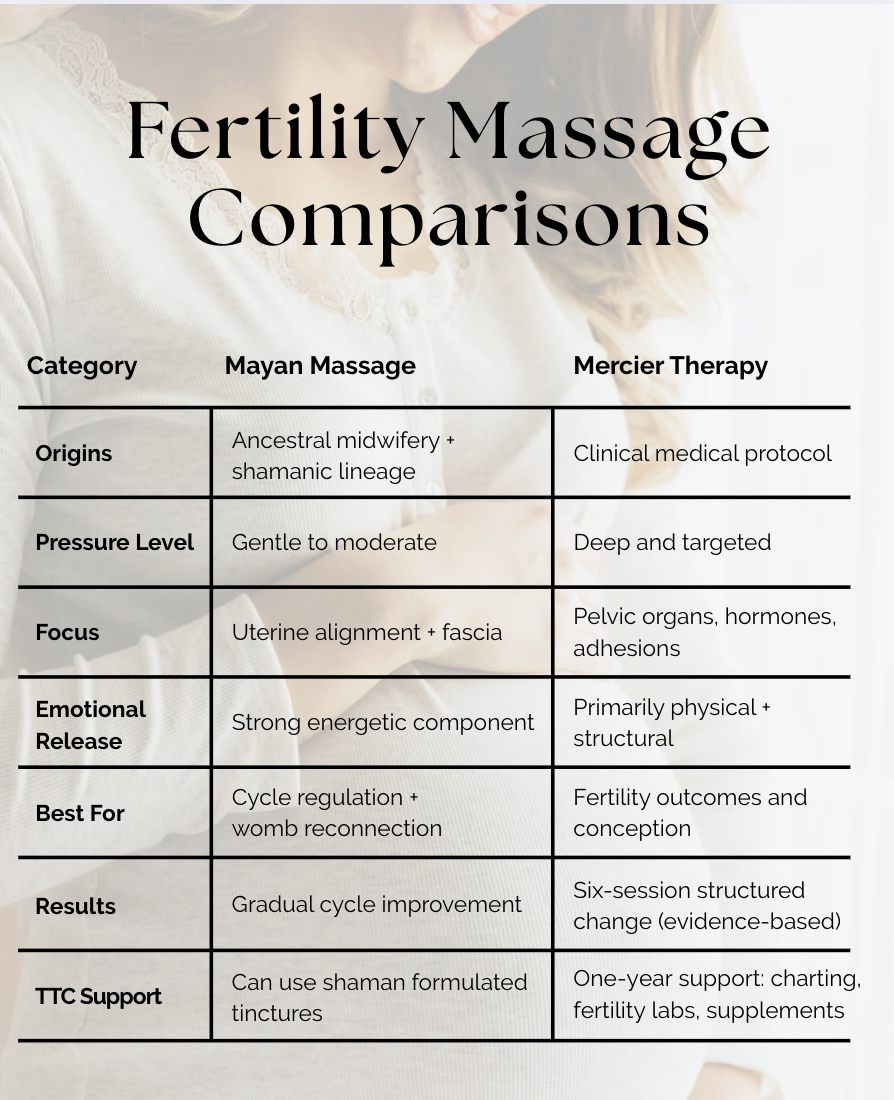
Mayan Abdominal Therapy - (learn more)
Mercier Therapy - (learn more)
Myofascial Release
Craniosacral Therapy
Lymphatic drainage
Pelvic floor balancing
Castor oil applications - (Castor Oil Guide)
Gentle uterine repositioning
Each modality supports fertility in a slightly different way, but the goal is always the same: to improve pelvic circulation, reduce restrictions, and create optimal alignment for conception.
Mayan Abdominal Therapy vs. Mercier Therapy
Understanding the difference helps women choose the right path for their body:
Mayan Abdominal Therapy
A gentle, external massage that lifts and repositions the uterus, improves blood flow, and helps release congestion. Excellent for painful periods, clotting, low progesterone symptoms, digestive sluggishness, and stagnant womb energy.
Best for: painful periods, irregular cycles, clotting, PMS, prolapse support, and postpartum recovery
Mercier Therapy
A deeper, more structured protocol that works with the fascia, ligaments, and organs surrounding the reproductive system. It enhances mobility of the uterus, ovaries, and tubes — supporting ovulation, hormone regulation, and pelvic organ function.
Best for: longer TTC journeys, PCOS, Endometriosis, recurrent pregnancy loss, failed IUIs/IVFs, unexplained infertility, tubal restrictions, and significant pelvic trauma.
Benefits of Fertility Massage
1. Improves Pelvic Circulation & Blood Flow
Healthy blood flow = healthy hormones + healthy ovulation.
Massage brings fresh oxygen to the ovaries, uterus, and endocrine glands.
2. Supports Hormone Balance
By improving circulation to organs like the ovaries and adrenals, fertility massage can help regulate progesterone, estrogen, and stress hormones naturally.
3. Encourages Optimal Uterine Position
A tilted or low-lying uterus can impact implantation, cause painful periods, or contribute to irregular cycles. Abdominal therapy helps restore ideal alignment.
4. Breaks Up Adhesions & Restrictions
Scar tissue from C-sections, surgeries, infections, endometriosis, or past trauma can limit organ mobility. Massage helps soften and release restrictions.
5. Reduces Bloating & Digestive Sluggishness
This is where “belly massage benefits” tie in beautifully. Abdominal work improves digestion, gut motility, and lymph flow — all essential for hormone health.
6. Supports Emotional Release & Nervous System Healing
The womb holds stories. Fertility massage often leads to emotional softening or release, allowing women to shift out of fight-or-flight and into parasympathetic (rest + receive) mode — the state conception prefers.
7. Complements Natural, IUI, or IVF Cycles
Whether you’re trying naturally or through assisted cycles, fertility massage prepares the pelvis for healthier ovulation, better circulation, and a more receptive uterine lining.
Why Fertility Massage Actually Works: The Biomechanics Behind Conception
Most people think fertility massage is simply “belly work,” but the science behind it is much deeper — and incredibly logical once you understand the biomechanics of the body.
Think of it like traditional massage for shoulder pain:
If someone comes in complaining of pain between their shoulder blades, the instinct might be to work directly on that tender spot. But any experienced bodyworker knows the real problem often isn’t in the back at all — it’s in the front of the body.
When we sit at a desk all day with our arms forward, the chest muscles shorten and tighten. The upper back muscles (rhomboids) stretch and weaken. The pain is felt in the back, but the root cause is the imbalance in the front.
If a practitioner only treats the painful area, the relief won’t last. But when the entire shoulder girdle is balanced — chest opened, spine realigned, back strengthened — the pain resolves.
Fertility massage works the same way.
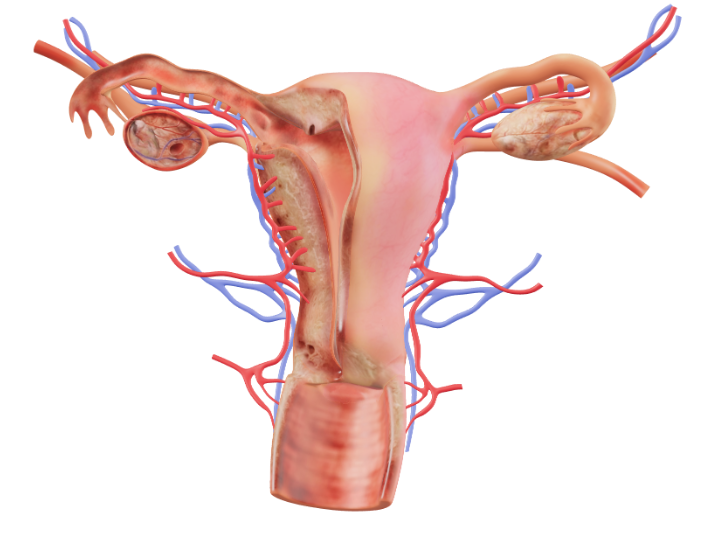
The reproductive organs don’t function in isolation. They are held, suspended, and influenced by the:
pelvis
sacrum
abdominal wall
diaphragm
hips
fascia
ligaments that attach the uterus in eight directions
If one of these areas is restricted, rotated, compressed, or “stuck,” the uterus and ovaries can’t receive the circulation, mobility, and hormonal signaling they need.
This is why fertility massage is not simply “massaging the belly.”
It is whole-system alignment — addressing the hips, sacrum, low back, abdomen, and surrounding fascia so the uterus can sit and function as it was designed to.
The Role of Circulation, Fascia & Organ Alignment in Fertility
Where there is dysfunction, there is almost always restricted circulation.
Scar tissue, adhesions, chronic sitting, old injuries, and emotional guarding can create a “locking down” effect in the pelvis. This limits blood flow to the uterus, ovaries, and endocrine glands — all of which rely on oxygen, nutrients, and hormonal messaging to function optimally.
Fertility massage helps by:
Breaking up adhesions that restrict organ mobility
Softening fascia so the uterus can return to a healthy position
Restoring circulation so hormones can actually reach their target tissues - → (CD3 Tracker)
Improving lymphatic flow, clearing stagnation and inflammation
Releasing the sacrum, which sits directly behind the uterus and influences her position
Balancing the pelvis, so the ligaments that hold the uterus stop pulling her out of alignment
When the uterus has freedom to move — when she is no longer “stuck,” tilted, compressed, or pulled — the entire reproductive system begins functioning more harmoniously. You often see this reflected in improved fertility markers, more balanced lab work, and a body that finally starts moving toward its optimal ranges.
Hormones regulate better.
Ovulation becomes more reliable.
Implantation becomes more possible.
This is why fertility massage often creates changes that supplements alone cannot: because it restores the physical landscape conception depends on. And while supplements support the journey, bodywork is what helps create the alignment and circulation those supplements need to work effectively.
A Beautiful Story From the Arvigo Lineage — and Why It Matters Today
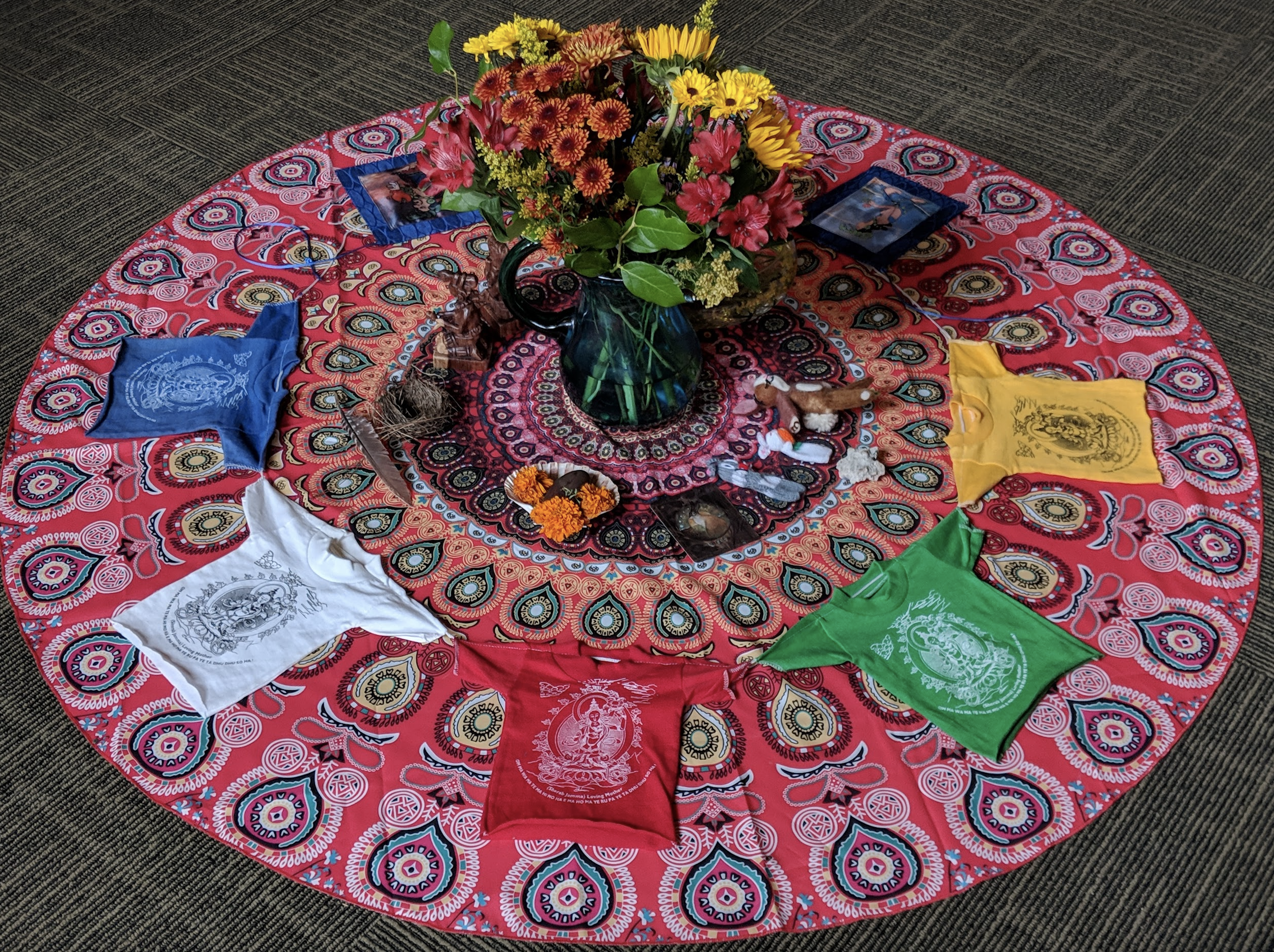
In my Arvigo training, while Rosita was still teaching, we were told a story about the great Maya healer Don Elijio Panti.
When women and girls traveled long distances to visit him — often after the medical system had failed them — he had a rule:
✨ Any young woman under the age of 18 who had fallen on her hips, tailbone, or buttocks was seen first.
Sacrum begins fusing: around ages 16–18
Sacrum completed fusion: typically between ages 25–30
Why?
Because before the bones of the pelvis fully fuse, a fall can shift the uterus or tighten the ligaments that hold her in place.
If he could restore balance early, he could prevent a lifetime of painful periods, fertility struggles, or difficult pregnancies.
Even today, many modern fertility issues relate not only to medical conditions — but also to lifestyle patterns:
prolonged sitting
collapsed posture
tight hip flexors
restricted diaphragmatic breathing
chronic stress tightening the lower abdomen
falls, accidents, or sports injuries

When in Your Cycle Should You Get a Fertility Massage?
Timing depends on the modality you’re receiving. Here’s the optimized breakdown:
Follicular Phase (After Period → Ovulation)
Ideal for most fertility bodywork, including:
Mayan Abdominal Therapy
Mercier Therapy
Castor Oil Packs → read more here (Castor Oil Guide)
Pelvic fascia work
Uterine mobility support
Ovulation Window
Mayan Massage - we can do gentle work up until ovulation.
Mercier Therapy - can continue through ovulation, no problem
Luteal Phase (After Ovulation)
If you are trying to conceive that cycle:
Mayan Massage - no massage during this time
Mercier Therapy - can continue through the luteal phase (massage techniques to not interfere with implantation, as proved by the clinical studies)
During Menstruation
Mayan Abdominal Therapy: Hands off during active bleeding
Mercier Therapy:
Allowed during menstruation unless you have Endometriosis
If you have Endo → avoid abdominal work during active bleeding
Mercier Therapy (Important Clarification)
Mercier Therapy is unique in that:
It can be done at any point in your cycle
EXCEPT during your period if you have Endometriosis
If you do not have Endometriosis, Mercier sessions can safely continue throughout the entire cycle
Post-ovulation sessions are still supportive because Mercier focuses on pelvic mobility, fascia, and reproductive organ alignment — not direct uterine manipulation

How Many Sessions Do You Need?
Every woman’s body responds differently, but here is the general structure based on the two modalities most women choose for fertility support:
Mayan Abdominal Therapy
Most people need 1–3 sessions to learn the work, followed by monthly follow-ups.
If you’re trying to conceive, meaningful changes typically unfold over 3–6 months—closer to three months when things are straightforward, and 6+ months when there are deeper fertility challenges.
Because Mayan work syncs with the menstrual cycle, most clients are seen once per month. This slower, cyclical pace allows the uterus, ligaments, fascia, and hormones to shift gradually.
For women trying to conceive, the intention is not urgency but restoring balance, improving circulation, regulating cycles, and creating optimal conditions for implantation.
Mercier Therapy
Mercier Therapy is a structured, fast-tracked series: 6 consecutive sessions completed over 6 weeks, followed by a full year of fertility charting and coaching. This consistent rhythm is essential — the body builds momentum each week, and spacing sessions too far apart can slow or undo progress.
Unlike Mayan’s monthly abdominal work, Mercier is designed to create continuous change by:
breaking down adhesions
restoring mobility to the uterus and ovaries
retraining the pelvic bowl (by breaking up old holding patterns)
improving blood flow and lymphatic movement
supporting hormone signaling and circulation
This concentrated approach often leads clients to notice fertility shifts sooner than with monthly massage alone.
For clients with Endometriosis, the protocol is gently extended by one additional week to protect the body from flare-ups — but otherwise, the work is intentionally uninterrupted so the pelvis can unwind layer by layer.
The Bottom Line
Fertility massage is one of the most powerful, holistic tools for women trying to conceive. It supports the body physically, emotionally, and energetically — helping you reconnect with your womb and restore balance where it’s needed most.
Whether preparing for natural conception, IUI, or IVF, abdominal and pelvic massage can help you feel more grounded, more aligned, and more supported on your path to motherhood.
If you’re ready to explore which modality is right for your body — Mayan Abdominal Therapy (learn more) or Mercier Therapy (learn more) — you can book a 60-minute Fertility Consultation (book now).
In this visit, we review your labs, cycle patterns, cervical mucus, past procedures, and reproductive history so you receive a clear, customized plan for your fertility journey. This session provides deeper insight than a first Mayan appointment alone, helping you determine whether your body needs slow cyclical support or the faster, structured approach of Mercier Therapy.
If you prefer to begin with a Mayan Initial Session instead, that’s perfectly fine — just know that Mayan sessions do not include labwork review, cycle interpretation, or fertility strategy. Those pieces are only covered in the consultation.
This consultation is required for Mercier, and if you decide to move forward, the $200 fee is applied toward your program.